When Nupe Style Lived in Full Color
The early 1990s were not an era of quietly blending into the background.
 The music was louder. The silhouettes were bigger. The colors were brighter. Fashion was not simply something people wore—it was a way of announcing who they were, where they came from, and what they represented before they ever said a word.
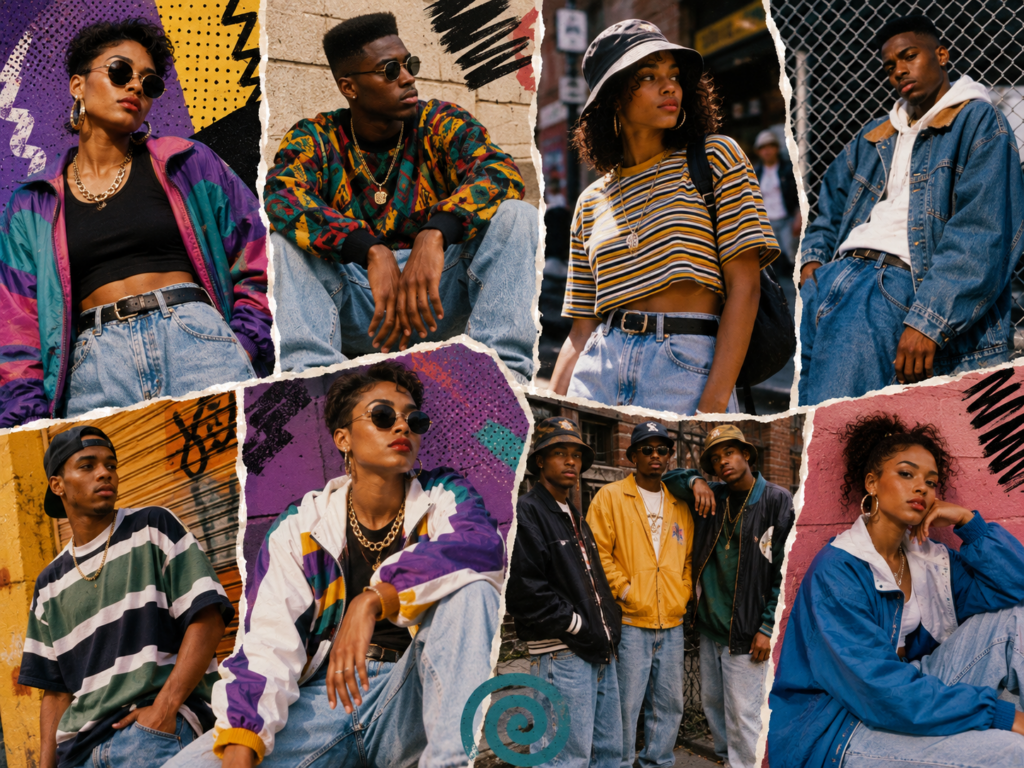
That energy is the inspiration behind our In Living Kolor artwork.
The collage brings together many of the visual signatures that defined the period: over-sized windbreakers, relaxed denim, graphic shirts, varsity jackets, bucket hats, high-top sneakers, gold accessories, geometric patterns, and unapologetically bold color combinations. Torn-paper edges, halftone dots, hand-drawn marks, and overlapping photographs give the artwork the feeling of an old magazine spread, record insert, campus flier, or bedroom-wall collage assembled from the culture of the time.
Style as Identity
For Black men in particular, clothing has long carried meaning beyond fashion. It can communicate confidence, aspiration, belonging, individuality, and resistance. During the rise of hip-hop and street wear, fashion became an especially visible form of cultural expression.
The early ’90s were full of contrast. A clean varsity jacket might be worn over a bright graphic tee. Baggy jeans could be paired with polished sneakers and gold jewelry. Preppy collegiate traditions existed alongside the growing influence of hip-hop, sportswear, and Black-owned urban fashion brands.
Nupe style naturally existed at the intersection of those worlds.
Kappa Alpha Psi was born in the collegiate environment, and the fraternity’s identity has always been connected to achievement, presentation, leadership, and campus life. A Nupe could appear polished and refined one moment, then step onto the yard in a bold jacket, fraternity colors, or graphic apparel that made his affiliation instantly recognizable.
It was not about following a single uniform. It was about presence.
Elite Yard Fashion
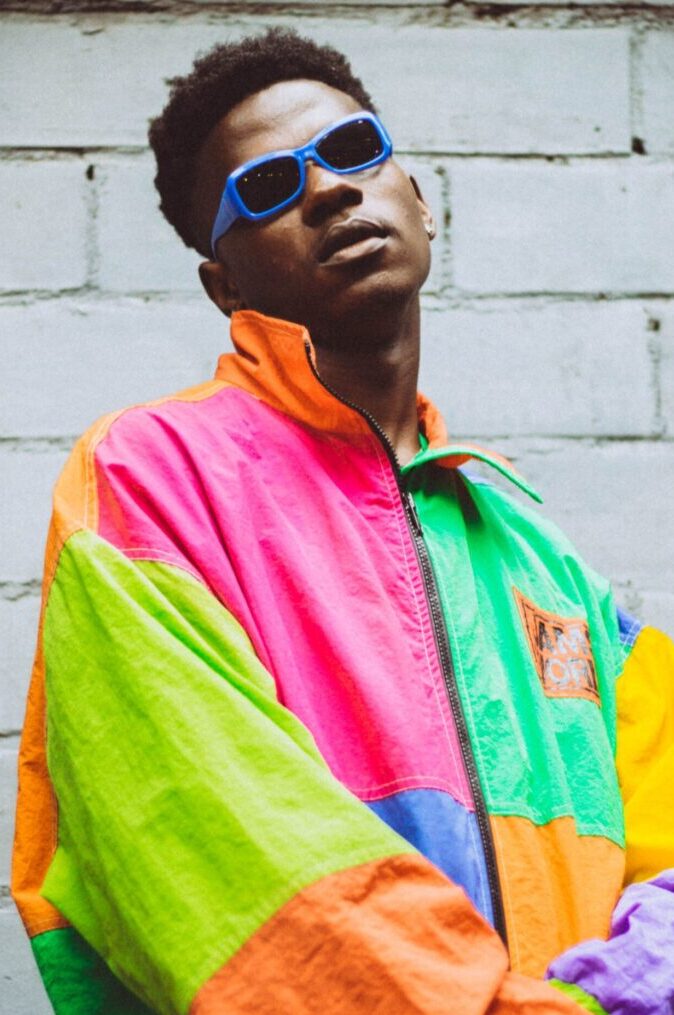 Long before social media feeds and daily outfit posts, the college campus was where style traveled.
The student union, the quad, the cafeteria, the dormitory courtyard, the probate, the step show, the party, and the football game all became places where students could see what was next. HBCU campuses were especially important spaces for Black self-expression, cultural pride, scholarship, community, and tradition.
A jacket seen at one campus event might inspire an entirely different look the following weekend. A music video could introduce a new silhouette. An album cover might influence a flier. A fraternity member’s customized piece could become part of a chapter’s visual identity.
Fashion, music, art, and fraternity culture did not occupy separate lanes. They continuously borrowed from one another.
That is why the figures in the collage feel less like isolated models and more like personalities you might have encountered walking across campus. Each person has an individual look, but together they represent a larger cultural moment.
Dressed to the Rhythm
The fashion of the period cannot be separated from its soundtrack.
Hip-hop’s expanding cultural influence helped popularize wide-leg jeans, tracksuits, bomber jackets, backward caps, bold jewelry, over-sized clothing, and vibrant sportswear. At the same time, new jack swing, R&B, house music, and the emerging sounds of Southern hip-hop created distinct moods that could be seen as clearly as they could be heard.
The clothes had rhythm.
Color-blocked jackets appeared to move even when the wearer stood still. Geometric shirts carried the same visual energy as a dance-floor beat. Oversized silhouettes created swagger, while carefully selected accessories brought the entire look together.
The collage reflects that movement through angled photographs, interrupted borders, overlapping shapes, and visual elements that seem to jump from one section into another.
The Graphic Language of the Era
The artwork also draws heavily from the graphic design associated with the late 1980s and early 1990s.
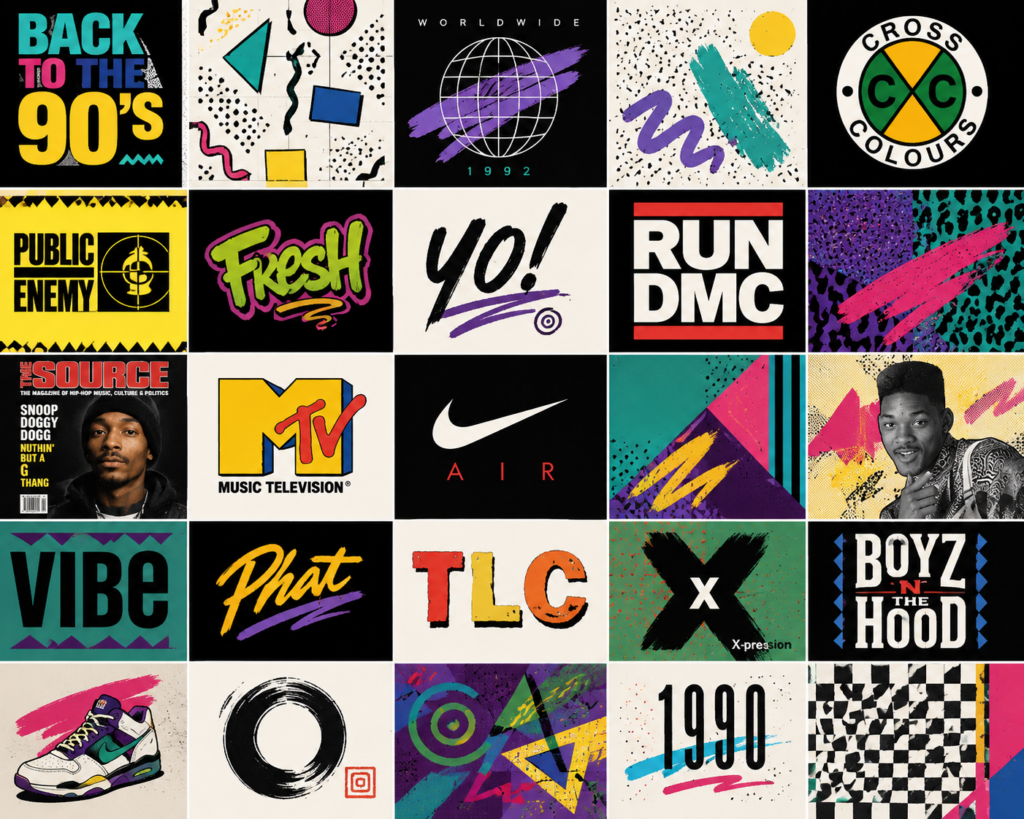
Designers embraced clashing colors, abstract geometry, playful patterns, grids, squiggles, and irregular shapes. The influence of Memphis design—a postmodern movement known for breaking the rules of restrained, traditional design—continued to appear throughout television, fashion, advertising, packaging, and popular culture.
Hip-hop album artwork added another layer. Photography, dramatic typography, saturated colors, handmade textures, and experimental compositions helped artists visually establish their identities before a listener ever pressed play. Album covers became more than packaging; they became cultural artifacts.
Our collage uses that same philosophy. It is intentionally busy, energetic, and imperfect. It does not ask the eye to remain in one place. It invites the viewer to explore every corner.
More Than Nostalgia
The purpose of revisiting this era is not simply to recreate an old photograph or imitate a familiar television aesthetic.
It is about remembering a period when Black creativity seemed to arrive from every direction at once—through music, clothing, dance, graphic design, fraternity life, and the energy of the college campus.
The In Living Kolor design translates that spirit into something new. It honors a time when Nupe fashion could be colorful without losing sophistication, playful without losing purpose, and expressive without requiring explanation.
The result is more than a throwback.
It is a reminder that Nupe style has never been about disappearing into the crowd.
It has always been about making an entrance.